
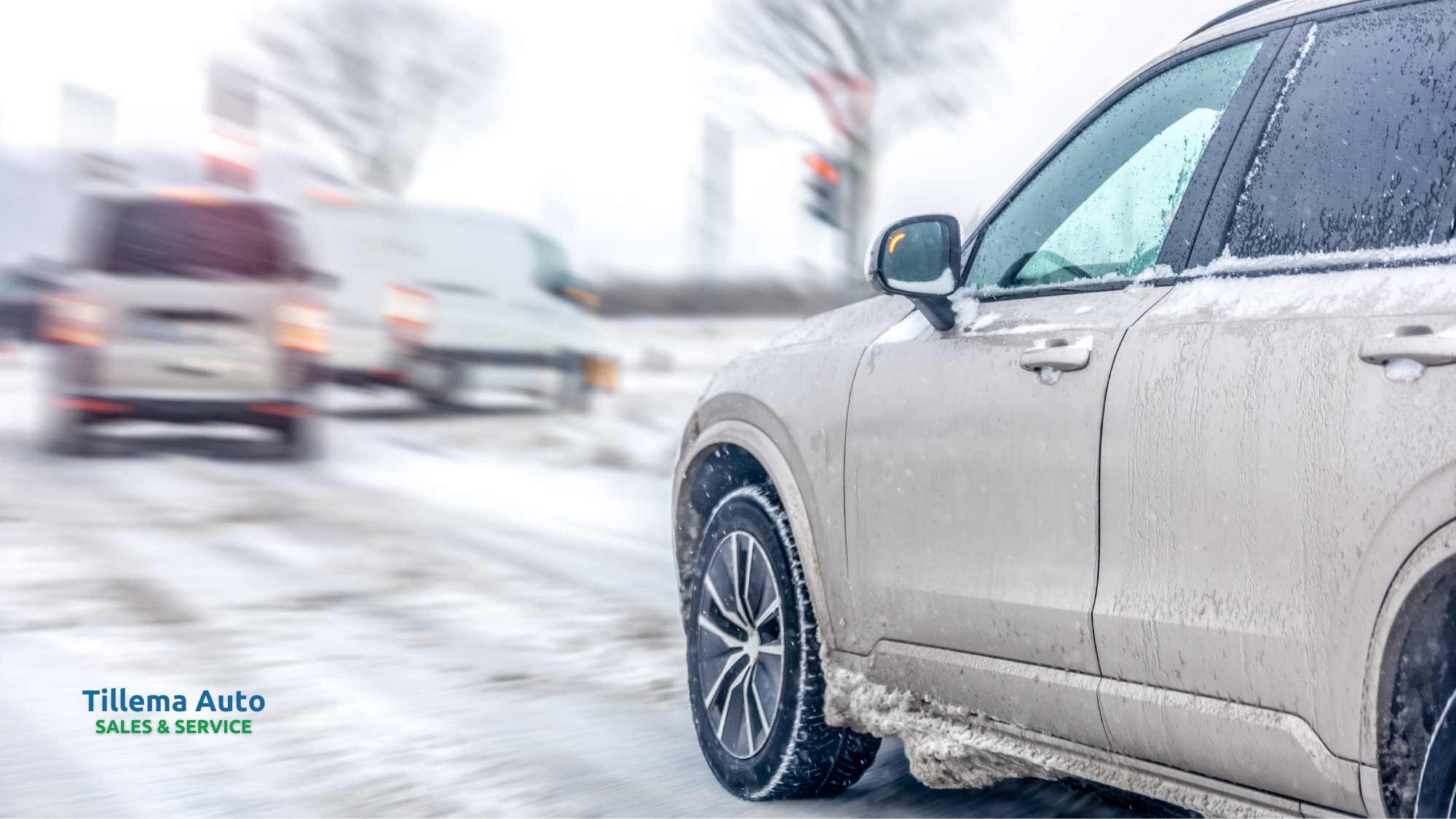
Good winter driving etiquette isn’t just about following the rules of the road. It’s about looking out for the people around you.
West Michigan winters can be unpredictable. One morning the roads are clear, and the next you’re crawling down 84th Street in a whiteout. When conditions get tough, the way drivers treat each other matters just as much as how well their tires grip the road.
Most of us know the safety basics. Slow down. Leave extra space. Don’t brake suddenly. But there’s another layer to winter driving that doesn’t get talked about as much: courtesy. Here’s what being a considerate driver actually looks like when the snow starts falling in Byron Center.
Clear Your Entire Vehicle Before You Drive
This one is about more than your own visibility. When you leave a thick layer of snow on your roof, hood, or trunk, it becomes a hazard for everyone behind you.
Snow that slides off your roof at highway speed can hit the car behind you with surprising force. Ice chunks are worse. Even loose powder creates a blinding cloud for the driver directly behind you at high speed.
Take the extra few minutes to clear your entire vehicle before you pull out. That means the roof, the hood, the trunk, all four windows, the mirrors, and your headlights and taillights. It’s one of the most considerate things you can do for the drivers sharing the road with you.
Give Snowplows the Room They Need
Snowplows are doing some of the most important work on winter roads, and they need space to do it.
Stay well behind a plow that’s actively clearing your lane. The spray of snow and salt coming off the blade can reduce your visibility almost instantly, and the plow itself may move unpredictably as the driver works around obstacles.
Passing a snowplow is one of the riskier moves you can make in winter conditions. The area directly alongside the blade is where the snow is deepest and the traction is worst. If you can wait until the plow has cleared ahead, wait.
Use Your Headlights in Snow and Low Visibility
A simple rule that works: if your wipers are on, your headlights should be on too.
Headlights in a snowstorm aren’t just about seeing. They’re about being seen. A gray or silver vehicle moving through falling snow can be nearly invisible to an oncoming driver without lights on. Turn them on even during the day when visibility drops.
Check that your taillights and brake lights are fully cleared of snow before you head out. A light buried under an inch of snow isn’t doing its job.
Take Turns at Merges and Four-Way Stops
Winter weather tends to back up intersections and merge points faster than usual. When traffic slows, the temptation to push through can make things worse for everyone.
At a four-way stop with icy conditions, be patient and take your turn cleanly. A controlled, predictable stop and start is safer for you and less stressful for the drivers waiting around you.
At merge points, zipper merging works. One car from each lane, in turn. It keeps traffic moving more smoothly than one lane forcing its way ahead, and it reduces the stop-and-go that causes sliding on slick surfaces.
Don’t Tailgate.
Stopping distances on snow and ice can be dramatically longer than on dry pavement. What would take a couple of car lengths in July might take ten or more in January.
Tailgating in winter conditions doesn’t just put you at risk. It puts the driver in front of you at risk too. If they need to brake suddenly for any reason, you may not have enough distance to stop before you reach them.
The rule of thumb in good conditions is three seconds of following distance. In winter, double it. If you’re on ice or in a whiteout, give even more. The extra few seconds you lose won’t matter nearly as much as the accident you avoid.
Be Patient With Drivers Who Are Struggling
Not everyone on the road in a snowstorm is equally prepared or equally experienced. Some drivers are in vehicles with worn tires. Some are from out of town and haven’t driven in snow before. Some are just nervous, and that’s okay.
If you see a driver moving slowly, give them space and don’t pressure them by riding close behind. If someone is stuck in a parking lot or on a side street, and you can safely stop to help, that kind of kindness goes a long way.
Byron Center is that kind of community. We look out for each other, especially when conditions are tough.
Plan Ahead So You’re Not Rushing
A lot of winter driving problems come down to time pressure. When you’re running late, you take risks you wouldn’t otherwise take: following too close, passing when you shouldn’t, pushing through a yellow light on an icy intersection.
The simplest form of winter driving etiquette is building extra time into your commute. Leave ten minutes earlier than you think you need to. Give yourself permission to move at the pace conditions call for rather than the pace your schedule demands.
When you’re not rushed, you make better decisions. And better decisions make the roads safer for everyone around you.
Make Sure Your Vehicle Is Ready for the Season
Being a courteous driver starts before you ever pull out of the driveway. A vehicle that’s properly maintained is more predictable, more responsive, and less likely to become a problem for other drivers on the road.
If you haven’t had your vehicle looked at since summer, now is a good time. Our team at Tillema Auto checks brakes, tires, fluids, and all major components as part of our service process. We can usually get you in within the week.
You can also check out our posts on winter driving safety and understanding black ice for more on keeping yourself and your vehicle ready for what West Michigan winters throw at you.
Ready to Head Into Winter With Confidence?
Being a good driver this winter starts with a vehicle you can trust. Here’s how it works:
1. Schedule a service appointment online or give us a call. We’ll check your brakes, tires, fluids, and the major systems that matter most in winter conditions.
2. Come in and let our team take a look. We’ll give you an honest read on where things stand and flag anything that needs attention before the worst of winter hits.
3. Head into the season knowing your vehicle is ready. That peace of mind makes it a lot easier to be the calm, courteous driver everyone around you needs.
Give us a call at (616) 878-5991 or stop by and see us in Byron Center.
Frequently Asked Questions
Why is it important to clear snow off your entire vehicle before driving?
Snow flying off your roof at speed can hit the car behind you hard, and ice chunks are even more dangerous. Clearing your entire vehicle before you drive is one of the most considerate things you can do for the people sharing the road with you.
When should I turn my headlights on in winter?
A good rule of thumb: if your wipers are on, your headlights should be on. Headlights in a snowstorm aren’t just about seeing the road. They’re about making sure other drivers can see you.
How much following distance should I leave in winter?
In dry conditions, three seconds of following distance is the general guideline. In snow or ice, double that at minimum. On black ice or in a whiteout, give yourself as much room as traffic allows.
What’s the safest way to merge in winter traffic?
Zipper merging, where one car from each lane takes turns, is the most efficient and predictable approach. Avoid forcing your way ahead or stopping abruptly, since sudden stops on slick roads can trigger chain-reaction problems behind you.
How do I know if my vehicle is ready for winter driving?
The key things to check are tire tread and pressure, brake condition, fluid levels, battery health, and whether all your lights are working. Our team at Tillema Auto goes through all of this during a standard service visit. Give us a call and we’ll get you in.